
Have you ever hesitated to ride your bike to a concert, the train station, or the beach for fear of not having a safe place to leave it? You’re not alone. In fact, 87% of cyclists avoid stopping or parking for fear of having their bike stolen.
The good news is that when this problem is solved with secure spaces, our behavior changes immediately. A recent article published by IN-MOVE by Railgrup discusses this major urban mobility challenge: Wheelskeep: smart parking solutions for bicycles, where they present a comprehensive solution that is changing the rules of the game.
Below, I summarize the key points of this innovative proposal.
What is Wheelskeep?
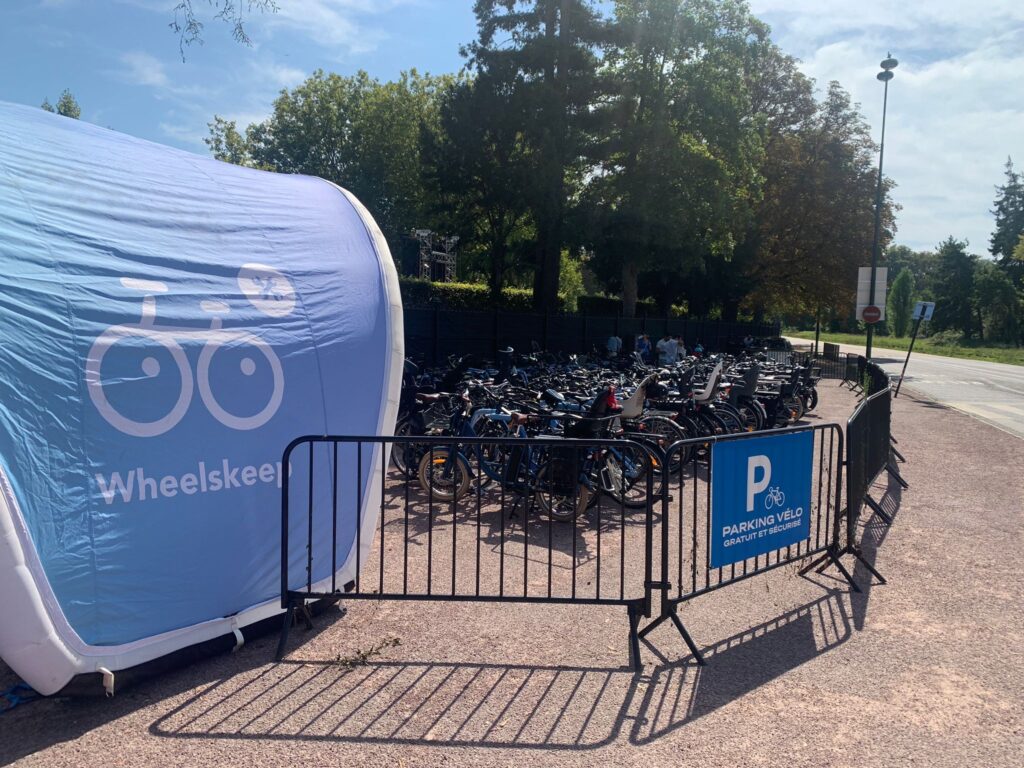
Wheelskeep is an initiative specializing in premium services for secure parking for bicycles and new light mobility devices (such as scooters). Its system combines modular infrastructure and professional operation to respond to environments with extremely high user demand.
Solutions for every environment
The article highlights that these infrastructures are not “one size fits all,” but rather adapt to different urban needs:
- High-traffic areas: Transportation stations, universities, campuses, and cultural centers.
- Major events: They offer comprehensive mobility management, from fleet rental and management to bicycle tracking using QR codes and the creation of sponsored bike lanes.
- Tourist areas (BEACHTIME): Systems that allow secure parking facilities to be installed on beaches, facilitating sustainable access for both visitors and residents.
Beyond parking: a complete experience
What makes Wheelskeep’s proposal truly interesting is that they transform a simple “parking lot” into a service and communication platform. Among their extras are:
- ⚡ Charging stations: For bicycles and electric scooters, with the possibility of integrating solar panels.
- 🛠️ Workshop service: Maintenance areas, repairs, and tools available to users.
- 📲 Digital connection: Communication channels with users via multilingual SMS or WhatsApp messages, turning the space into an interaction platform for organizations and brands.
The impact on our cities
Implementing this type of solution goes far beyond individual convenience. As the publication concludes, investing in secure parking directly contributes to reducing urban traffic, promoting active mobility, and accelerating the transition to cities that are much more sustainable and friendly for everyone.
If you would like to learn more about how these modular solutions are impacting urban mobility, I invite you to read the full article on the Railgrup website: Read the original post here.


